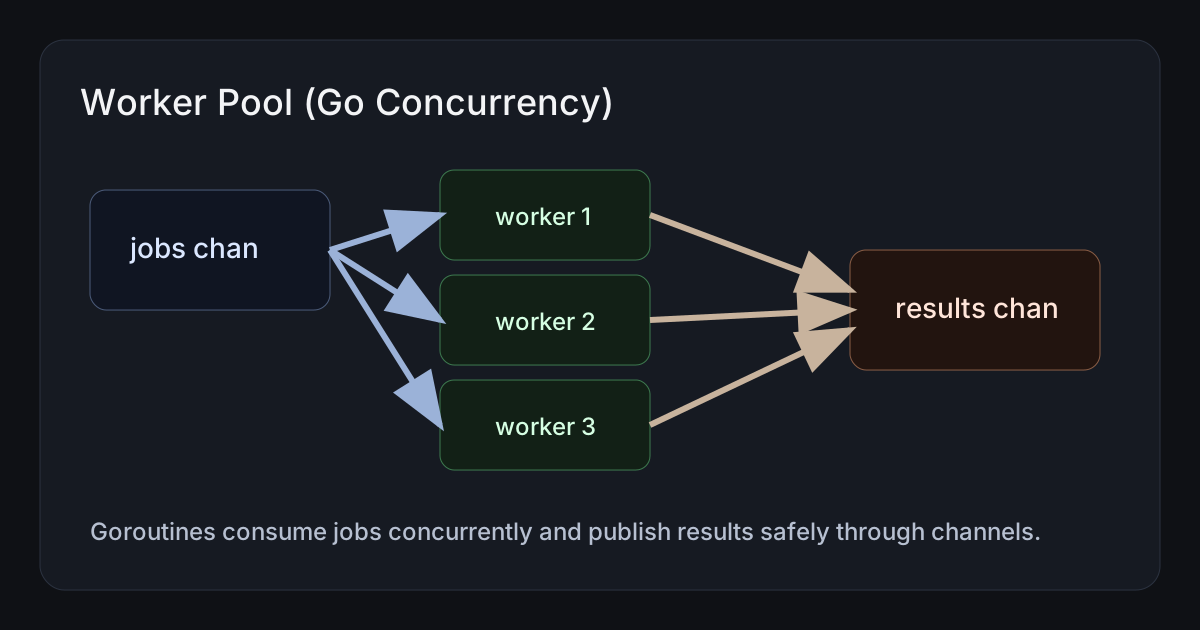
Go concurrency becomes much easier to reason about when you treat each goroutine as a focused unit of work, and each channel as a contract for communication. The most common production shape is a worker pool: a fixed number of workers consume jobs from a channel and push results to another channel.
This pattern is useful when you want bounded parallelism. Instead of launching one goroutine per item and risking resource spikes, you decide a worker count based on CPU, latency budget, and downstream limits.
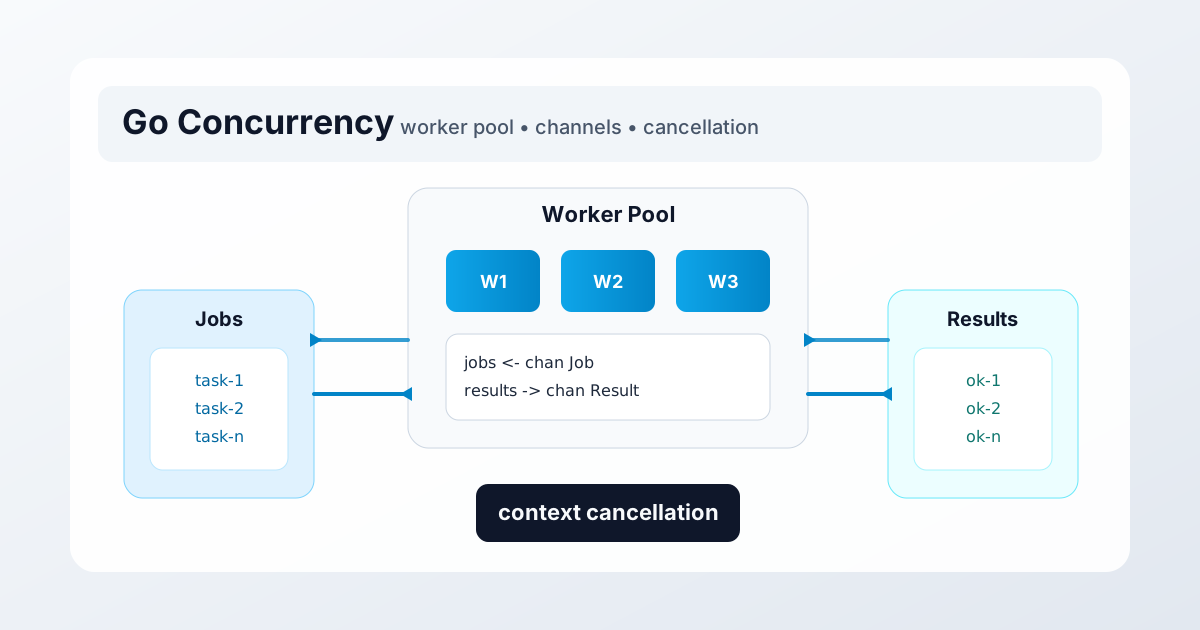
Why this pattern works
- You can limit concurrency by controlling worker count.
- You can apply backpressure with buffered/unbuffered channels.
- You can cancel all workers quickly with
context.Context. - You can collect errors in one place and decide retry behavior.
Minimal worker-pool example
package main

import (
    "context"
    "fmt"
    "sync"
    "time"
)

type Job struct {
    ID int
}

type Result struct {
    JobID int
    Value string
}

func worker(ctx context.Context, id int, jobs <-chan Job, results chan<- Result, wg *sync.WaitGroup) {
    defer wg.Done()

    for {
        select {
        case <-ctx.Done():
            return
        case job, ok := <-jobs:
            if !ok {
                return
            }

            // Simulate I/O or compute work
            time.Sleep(50 * time.Millisecond)
            results <- Result{JobID: job.ID, Value: fmt.Sprintf("worker-%d done", id)}
        }
    }
}

func main() {
    ctx, cancel := context.WithCancel(context.Background())
    defer cancel()

    jobs := make(chan Job, 10)
    results := make(chan Result, 10)

    const workers = 3
    var wg sync.WaitGroup

    for i := 1; i <= workers; i++ {
        wg.Add(1)
        go worker(ctx, i, jobs, results, &wg)
    }

    for i := 1; i <= 8; i++ {
        jobs <- Job{ID: i}
    }
    close(jobs)

    go func() {
        wg.Wait()
        close(results)
    }()

    for r := range results {
        fmt.Printf("job=%d %s\n", r.JobID, r.Value)
    }
}
Diagram
What to check before production
- Add timeout and cancellation to all external calls.
- Ensure channels are closed by one clear owner.
- Avoid goroutine leaks by handling all exit paths.
- Track queue depth and worker saturation in metrics.
- Keep worker logic idempotent where retries are possible.
This is a dummy post for layout preview, but the structure is production-friendly for real technical writing: short sections, one visual, one diagram, and one runnable code block.